Cognitive care for every resident. Results you can measure

Ayla brings structured cognitive care into everyday care homes through two distinct pathways - NICE-recommended Cognitive Stimulation Therapy for people living with dementia, and Cognitive Wellbeing for those outside the clinical pathway.
Because a dementia diagnosis shouldn't be the point at which we stop investing in someone's mind.
track one | The Clinical pathway
Living with a diagnosis
NICE-recommended Cognitive Stimulation Therapy, delivered to protocol with outcomes measured throughout.
Track two | cognitive wellbeing
For residents without a diagnosis
Structured cognitive wellbeing designed to keep minds active, strengthen connection and make participation visible.
built on evidence. designed for everyday care.
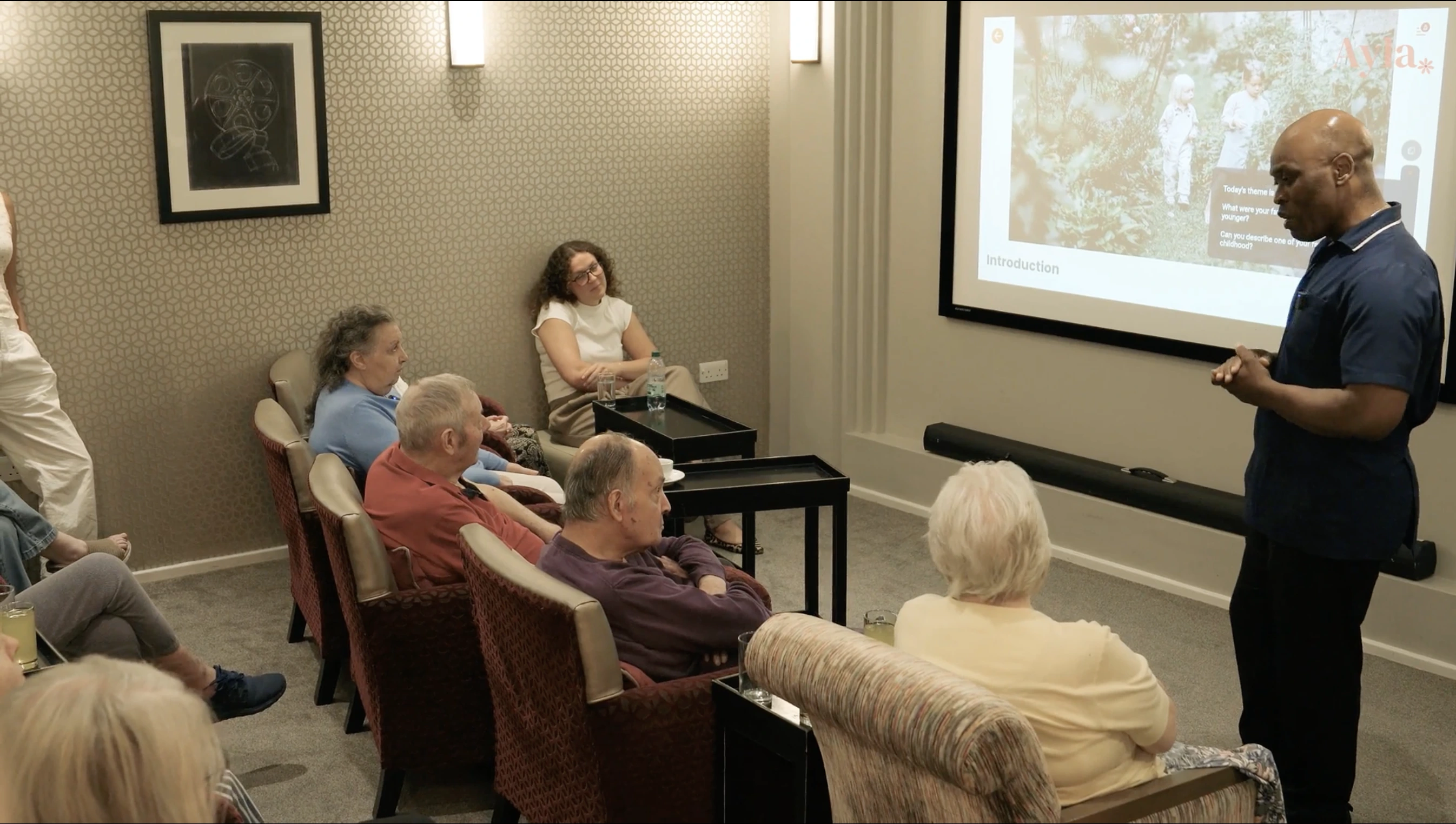
Residents taking part in a group cognitive stimulation therapy session.

01 · rack one | clinical

NICE has recommended CST since 2006. Too many people with dementia still miss out.

the evidence

Cognitive Stimulation Therapy is the only non-drug therapy shown in randomised controlled trials to improve both cognition and quality of life for people with mild to moderate dementia.

the reality

Yet in most UK care homes, CST still isn't delivered. Care teams want to provide it, but delivering a full seven-week programme takes time, training and confidence that many services simply don't have.

Ayla makes evidence-based CST possible in everyday care - so more people can benefit.

02 · Meet cognitive stimulation therapy

Track One: The Clinical Pathway.

Five to eight residents. Seven weeks. Two sessions a week. 45 minutes.

Cognitive Stimulation Therapy is a structured programme for small groups of people living with mild to moderate dementia. Each session uses themed activities designed to stimulate thinking, memory, language and social connection.

No session planning. No searching for activities. Ayla guides facilitators through each session, giving teams more confidence to focus on the people in front of them, while capturing delivery, participation and outcomes as they go.
Ready-to-run
Structured sessions guide facilitators from start to finish
Delivered with fidelity
The CST structure and principles are built into the programme.
Measured as it happens
Participation, engagement and outcomes are captured alongside delivery.
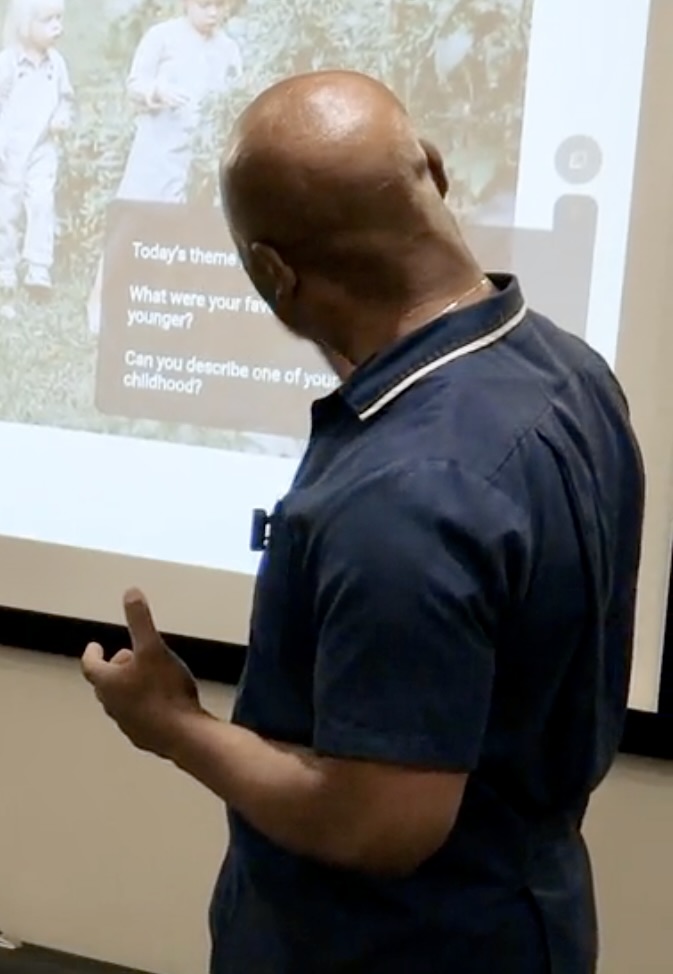
A facilitator using the prompts on the Ayla screen to guide a cognitive stimulation therapy session.
"The structure was already laid out for us, I open the screen and the different activities are shown to the residents who choose the one they're going to engage with"
Suyi, Cavendish Park
03 · Seven Weeks of CST

Two sessions a week, for seven weeks.

The programme moves through themed sessions, reminiscence, sound, categories, food, orientation, and more, each building on the last. Facilitators know what's next. Residents know when the group meets. Families can follow along.
By week seven, your team has delivered a complete course of NICE-recommended Cognitive Stimulation Therapy, with every session logged and every outcome captured.
Week one

Physical Games, Sounds

Movement, familiar music and shared conversation, designed to get residents moving, listening and joining in.
WEEK TWO

Childhood, Food

Reminiscence work with prompts drawn from the decade each resident grew up in, and from the meals they remember.
WEEK THREE

Current Affairs, Faces and Scenes

Current affairs, familiar faces and everyday scenes prompt residents to share opinions, recognise people and places, and join in conversation.
WEEK FOUR

Word Association, Being Creative

Language and making. Residents who had stopped joining in start finishing each other’s sentences.
WEEK FIVE

Sort Things into Categories, Orientation

Structured thinking and gentle, non-testing orientation built into conversation rather than delivered as a quiz.
WEEK SIX

Using Money, Number Games

Everyday numeracy in a group setting — practical, familiar, and rooted in things residents have always done.
WEEK SEVEN

Word Games, Team Games and Quizzes

The final week brings language, teamwork and play together - ending the programme with activities designed for participation, conversation and shared success.
1
2
3
4
5
6
7
04 · Session Breakdown

45 minutes, fully structured, fully scripted.

Two of these a week for seven weeks, then maintenance sessions following the same structure for as long as the group runs.
0 - 5 min
Welcome and warm-up
The same opening every week: names, the group song, today’s date and weather. Familiar routines can help people with dementia feel more settled, confident and ready to take part.
5 – 15 min
Orientation
Gentle, non-testing reality orientation built into conversation rather than delivered as a quiz.
15 – 35 min
The themed activity
The heart of the session - word games, current affairs, reminiscence, sound, or creative work.
35 – 42 min
Group reflection
What did we notice? What did we enjoy? Residents lead; the facilitator records.
42 – 45 min
Capture and close
Facilitator logs engagement in three taps. The outcome record is finished before the chairs are stacked.
05 · THE EVIDENCE FOR CST

Two decades of evidence
behind every session.

Improves cognition

Randomised trials and systematic reviews show CST produces measurable improvements in cognitive function for people with mild to moderate dementia.

Improves quality of life

Clinical trials show CST can improve self-reported quality of life alongside its cognitive benefits.

Cost-effective care

Economic studies have found CST can deliver better outcomes without higher overall costs compared with usual care.

The evidence matters because the person experiencing the difference matters.

Read the evidence
“She told me about her wedding day. Nobody had heard her say that much in a year.”
Activity Coordinator · Week five of a seven-week programme
06 · and then it keeps going

Seven weeks is the beginning, not the end.

The initial cycle runs for seven weeks. After that the group carries on, and so does the benefit - quality of life, mood, and social engagement keep improving with maintenance sessions.

In the days after a session

Staff describe joy and calm that outlast the 45 minutes: easier afternoons, calmer evenings, better sleep.

Sessions continue

The groups keep meeting after week seven. Ayla schedules the ongoing cycle and keeps capturing outcomes with it.

The gains keep building

Quality of life, mood, and social engagement continue to improve well past the initial seven weeks.

07 · The rest of the home

CST is the foundation. Cognitive care goes further.

track one | Clinical

CST is designed for people living with mild to moderate dementia. Keeping this clear means the programme is delivered as it was designed and tested, so its benefits can be measured reliably.

track two | COGNiTIVE wellBEING

For residents outside the clinical pathway, Ayla provides structured cognitive wellbeing sessions designed to keep minds active, strengthen connection and support meaningful participation.

One platform. Two tracks. Cognitive care for every resident.

08 · FOR NHS AND COMMISSIONERS

Evidence you can actually use.

Ayla turns delivery into evidence, giving commissioners a clear view of what was delivered, who engaged, and what changed.
Fidelity to the original CST manual, evidenced session by session.
Participation, engagement and mood recorded and exportable on demand.
Auditable from resident record to home-level outcomes report.
Talk to our Partnerships Team

Seven weeks from now, what would you like to hear?

See how Ayla could bring structured cognitive care to your home. Twenty minutes, your questions, and a clear view of what getting started looks like.
Book a demo