Outcomes

Cognitive care you can see working.

Ayla makes cognitive care measurable - showing what was delivered, who engaged and what changed over time.
Built around NICE-recommended CST
UKCA Class I medical device
Evaluated across 18 sites · 116 residents · 21 programmes

Why this matters

Dementia care is under more scrutiny than ever. That's a good thing.

Good care should lead to good outcomes, and those outcomes should be visible.
For residents and families, that means knowing whether someone is engaging, connecting and responding. For care providers and commissioners, it means being able to see what was delivered and what changed.
That's the standard Ayla is built around. CST already has a strong evidence base. Ayla helps care teams deliver it consistently and capture outcomes as part of everyday delivery, creating a clearer picture from individual resident through to service level.

Because behind every measure is a person.

Our method

How we build the evidence

Outcomes reporting isn’t a document we produce once a year. It’s built into delivery - from the first measure to what we change next.
01

Capture

Before, during and after
Residents, relatives and facilitators contribute measures before and after the programme, alongside observations captured during delivery.
02

Protect

Identified by ID, not by name
Each participant is assigned a unique ID rather than a name, allowing outcomes to be analysed without personal identifiers appearing in the reporting dataset.
03

Analyse

Reviewed in-house
Outcomes are brought together and reviewed across residents, groups and services, using consistent measures and reporting methods.
04

Report

Shared in plain terms
Findings are turned into clear, structured reports so care teams can see what was delivered, who engaged and what changed.
05

Act

Fed back into delivery
What we learn helps teams understand what's working, where support may be needed and what to do next.

ayla outcomes data

What we're seeing after seven weeks.

The outcomes shown relate to Track One | Clinical and CST. Across CST programmes delivered with Ayla, we're building a picture of what changes over seven weeks - and what stays stable.
Base figures: 18 services · 116 residents · 21 CST programmes
+16%
Quality of Life
Average increase across residents - energy, memory, mood & self-perception
+23%
Cognition, proxy-rated
Average increase across residents - rated by CST facilitators / care professionals
Cognition, self-reported
How residents rated their own cognitive ability:
Increased 46 %
Maintained 52 %
Declined 2 %
Mood
Outlook, adaptability, resilience & recall:
Increased 29 %
Maintained 53 %
Declined 18 %
Source: Ayla outcomes data - collated across 18 services, 116 residents and 21 CST programmes.

Case study

PILOT · JUL–DEC 2025

Case study: Majesticare, Cavendish Park

Eight residents. Fourteen sessions. One question: what would change over a programme of CST delivered with Ayla? Cavendish Park ran the programme following Ayla training, with outcomes captured from residents, relatives and the facilitator to build a picture from more than one perspective.
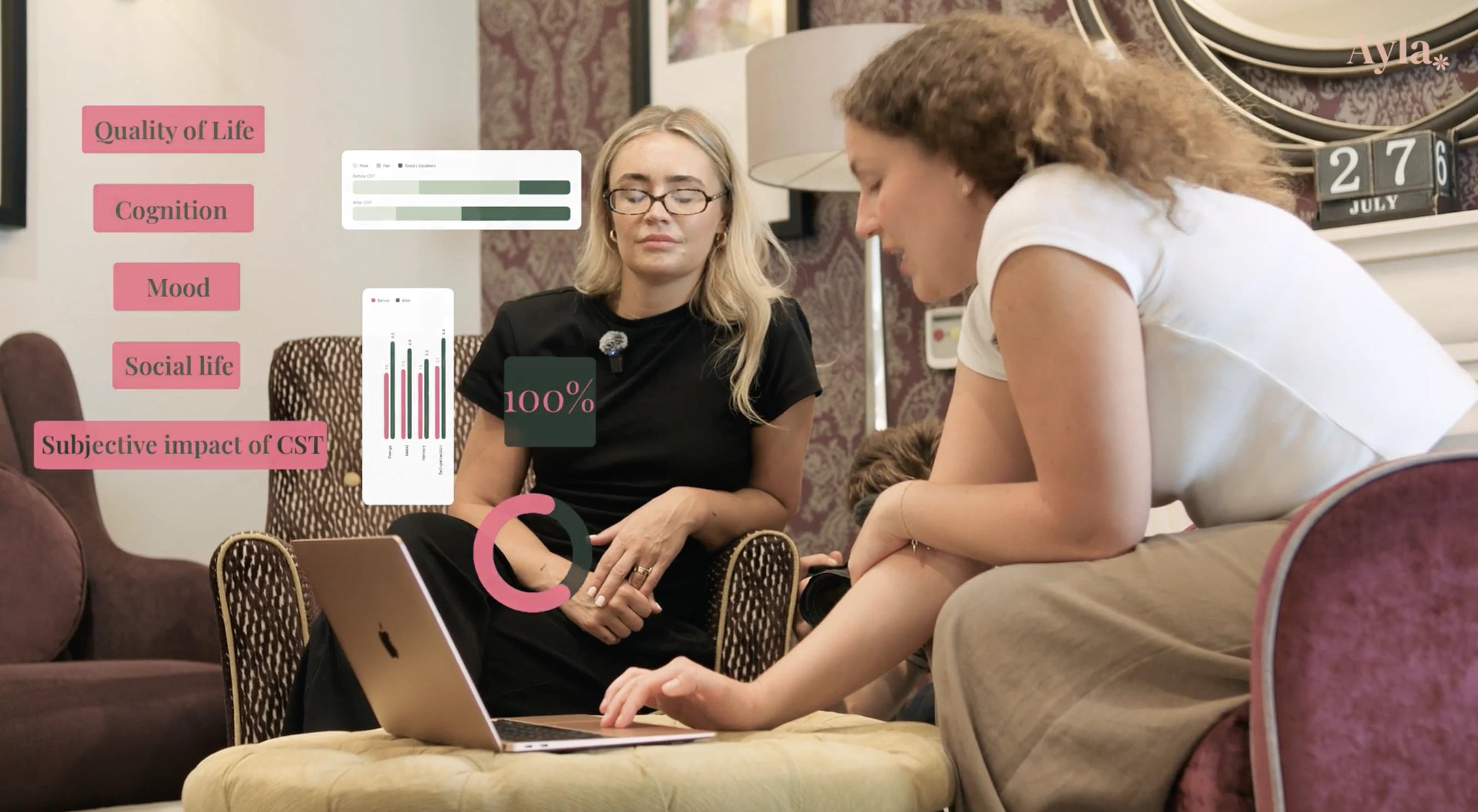
Staff discussing the outcomes from a programme completed at Majesticare Cavendish Park.
8 residents
14 sessions, twice weekly
4 relatives fed back
Programme dates: 6 Oct – 2 Dec 2025
Quality of Life
Scores rose across every domain measured - energy, mood, memory and self-perception. The largest shift was in perceived memory, up 40% across the group.
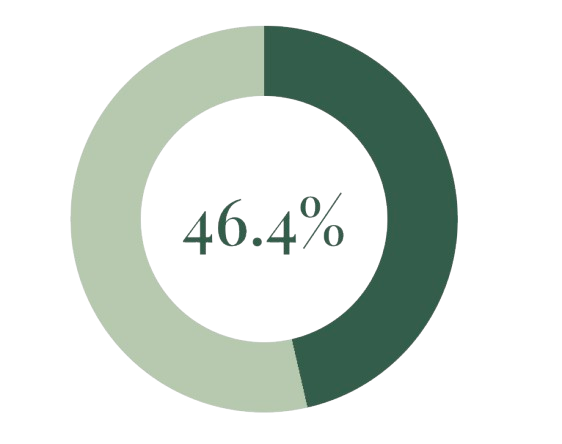
A graph demonstrating an increase in scores within the Quality of Life domain.
46.4% of scores improved
53.6% were maintained
0% declined
Subjective change in cognition
Every domain - memory, planning, communication, task-switching, showed the same pattern: improvement or stability, never decline.
Switching between tasks — improved
75%
Recalling intentions — improved
62.5%
Recognising people — maintained
87.5%

In their own words

“Valued the opportunity to interact with each other.”
Resident, on the sessions
“More talkative about the things that she recalls.”
Relative feedback
“Structured out the planning of the whole sessions — eliminated the worry about what to discuss.”
Facilitator, on using Ayla
Feedback was mixed as well as positive. One relative described the programme as “a positive form of therapy” while noting one aspect “caused… distress,” and another observed “more of a melancholy demeanour” while a different family saw their loved one “a bit more cheerful.” We report both positive and negative feedback because meaningful evaluation should show both.
“The data matters because it helps us understand what changed. But behind every measure is a resident - connecting with other people, contributing to the group and being seen as an individual.”
Devika Wood, Chief Executive Officer, Ayla

The evidence base

18 services
116 residents
21 CST programmes
Analysed in-house

Your residents could be next. Let’s find out.